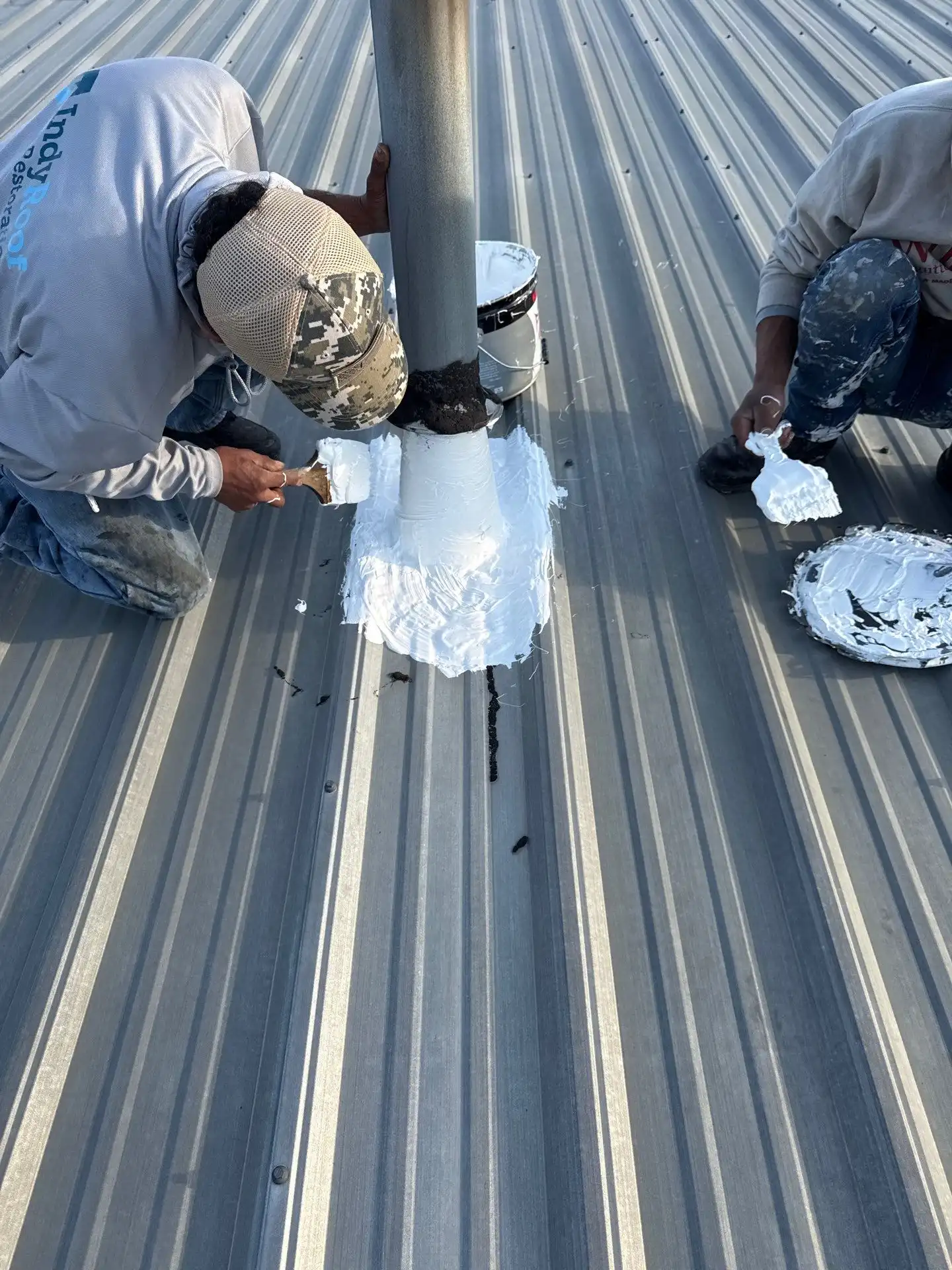
The 7 step Emergency Response Sequence
Here is the order our Brooklyn crews work in when a commercial roof is actively leaking:
- Phone triage. We ask about leak location, building use, ceiling type, and standing water inside.
- Safety check. Electrical panels under the leak get priority. Power kills before crews go up.
- Roof access and source location. Wind, ponding, and seam separation each leave different signatures.
- Temporary dry in. Tarps, peel and stick membrane, or sealant depending on substrate and weather.
- Interior water mitigation coordination. Ceiling tile removal, extraction, drying setup.
- Documented scope and photos. Insurance carriers need this and so do you.
- Permanent repair scheduling. Once the building is stable, we plan the real fix.
Symptoms That Mean Call Now, Not Tomorrow
- Water dripping from light fixtures or sprinkler heads
- Bulging ceiling tiles or visible sag in drywall
- Brown rings expanding hour over hour
- Standing water on a flat roof after rain has stopped
- Visible tears, blisters, or seam splits on the membrane
- Mechanical units sitting in puddles or surrounded by ponding
- Wet insulation pulled from a soffit or wall cavity
- Musty odors near return air vents or above suspended ceilings
- Rust streaks running down interior structural steel
- Tripped GFCI outlets on circuits that share a wall with exterior parapets
Any one of these means the building envelope is compromised right now. Two or more usually means the deck is wet, and wet deck dries slowly. The longer wet insulation sits between membrane and deck, the more square footage you eventually pay to replace.
What You Should Do Before the Crew Arrives
- Move inventory, electronics, and paperwork out from under the active drip
- Place buckets and lay plastic over anything that cannot be moved
- Shut off power to fixtures directly under the leak
- Photograph everything for your insurance file
- Note the exterior weather conditions when the leak started
- Pull the original roof installation paperwork if you have it
- Identify roof access points and any keyed gates
- Clear a path for ladder placement away from parked vehicles
- Notify tenants or staff that crews will be on site
Common Sources of Leaks We Find in Brooklyn Buildings
- Failed pitch pans around gas lines and conduit
- Open laps and reverse laps from prior repairs
- Drain bowl failures and clogged scuppers
- HVAC curb flashing pulled loose by service techs
- Hail bruising on aging single ply
- Ice damming at parapet walls during winter freeze thaw
- Skylight gasket dry rot
- Coping cap separation on parapet walls
- Satellite dish and antenna mounts drilled through the membrane
- Old solar penetrations left behind after panel removal
Pinpointing the actual source matters because water travels. The stain on the ceiling tile is rarely directly below the failure. Water can run laterally along a deck flute, drop through a fastener hole twenty feet away, and surface above a different tenant suite entirely. For a deeper look at how we trace water back to its origin, see our notes on roof leak origin detection versus repair.
How Brooklyn Metal Roofing Documents the Job for You
- Date and time stamped photos of every damaged area before any work begins
- Drone or pole imagery of the full roof field, not just the leak zone
- Moisture meter readings on insulation and deck where accessible
- Written scope of temporary measures with materials used and square footage covered
- follow up photos after dry in showing tarp tie down points and membrane terminations
- A separate proposal for permanent repair, kept distinct from the emergency invoice
This packet is what your carrier wants. It is also what protects you if the claim is questioned later or if ownership of the building changes hands while repairs are still pending.
How Insurance Usually Handles Commercial Roof Claims
- Sudden and accidental damage (storm, hail, wind, fallen tree) is typically covered
- Wear and tear, deferred maintenance, and age related failure are typically excluded
- Interior contents damage often falls under a separate policy section
- Carriers want photos taken before, during, and after temporary dry in
- Deductibles on commercial policies are often higher than residential, sometimes a percentage of the building value
- Business interruption coverage may apply if operations stop, but documentation is strict
- Adjusters often want a moisture survey or core sample before approving deck replacement
If interior water has reached drywall, flooring, or stored goods, the response shifts from roofing to full restoration. Our crew coordinates directly with the commercial water damage restoration side of the job so the building does not sit wet while you wait on roofing permits.
Typical Cost Ranges for Emergency Commercial Roof Work in Brooklyn
What You Should Not Do
- Do not send maintenance staff onto a wet membrane in a storm
- Do not apply consumer grade tar or caulk to a commercial seam
- Do not pull wet ceiling tile without a tarp under it
- Do not assume the leak stopped because the drip stopped
- Do not sign a full replacement contract during the emergency visit
- Do not throw away damaged inventory before it is photographed and inventoried
- Do not let an unrelated contractor "take a look" and probe the membrane further
Questions to Ask Any Emergency Roofer
- Will you provide written photos of the damage and the temporary repair?
- Do you carry general liability and workers comp on every crew member?
- Will the tarp hold through the next forecasted storm?
- Is the temporary repair credited toward a permanent fix?
- Who handles communication with my insurance carrier?
- Are your repair materials compatible with my existing warranty?
- Will I get the same project manager from emergency call through final invoice?
Direct answers to direct questions. If a contractor dodges any of these, keep calling. Brooklyn Metal Roofing keeps the same point of contact from the first phone triage through permanent repair, so nothing gets lost between crews.
Materials We Repair on Emergency Calls
- TPO: Heat weld patches on seams, mechanical fastener pull throughs, punctures from foot traffic
- EPDM: Seam separation, shrinkage at flashings, splice failures
- PVC: Plasticizer loss cracking, weld failures on older systems
- Modified bitumen: Blister repair, granule loss, lap seam separation
- Built up (BUR): Alligatoring, flood coat failure, gravel migration
- Metal: Fastener back out, panel seam leaks, rust perforation, flashing failure
- Single ply over foam: Bird damage, hail bruising, mechanical damage from HVAC service
- Coated roof systems: Coating delamination, ponding stains, reinforcement fabric exposure
What Decides Which Bucket You Land In
- Age of the existing membrane (TPO, EPDM, modified bitumen, BUR)
- Whether the insulation is wet and how much square footage
- Deck material: metal, wood, concrete, or gypsum
- Slope and drainage design
- Number of penetrations near the leak (HVAC, vents, drains, skylights)
- Warranty status with the original manufacturer
- Crane or lift requirements for material staging
- Whether tenants need to stay operational during repair
If you are unsure where your roof sits on the lifecycle curve, our team can compare repair against replacement during the same visit. We cover that tradeoff in detail in our breakdown of commercial roof restoration versus replacement, which is worth a read before you sign anything long term.